
The Meaning of Silence
The Collini CaseSilence functions as a legal right, a personal defense, and a barrier that the people around Collini must learn to interpret without forcing it away.
increasing Bearing strength in each event
 decreasing
Bearing strength in each eventdecreasingSilence at the Hearing
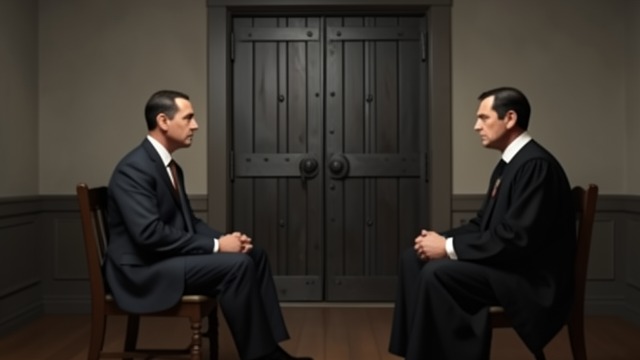
Silence at the Hearing
A protected choice
Collini refuses to speak about the accusation after the magistrate explains his rights. The state cannot treat that silence as proof of guilt.
Information withheld
The legal safeguard protects him, but also leaves investigators and counsel without the motive they seek. The case begins with a boundary that no one may simply cross.
Silence in the Interview Room

Silence in the Interview Room
Questions unanswered
Leinen asks why Collini killed Meyer and what the defense can tell the court. Collini says he does not want to talk about it.
A relationship tested
The lawyer must respect the client’s choice while explaining its consequences. Silence is neither an answer nor a confession of motive; it is a limit on what counsel can know.
Silence in the Investigation

Silence in the Investigation
No forced account
Collini refuses interrogation about motive and declines psychiatric examination. Police exhaust their leads without discovering a link to Meyer.
An empty explanation
The official file remains complete about the act but thin about the person. The investigators’ failure demonstrates how procedure can record evidence while leaving meaning inaccessible.
The First Public Words

The First Public Words
A personal explanation
Collini speaks in court when Mattinger asks why he waited so long. He tells the court that his aunt would have been unable to bear his imprisonment.
Speech on his terms
He asks Leinen to let him answer for himself. The moment does not end his reserve; it shows that he will speak when the question touches the part of the story he chooses to own.
Silence After Death

Silence After Death
The final note
Collini’s photograph and apology communicate more than he had said during months of interviews. The message remains brief, withholding any final argument about justice or forgiveness.
What cannot be answered
His suicide makes further explanation impossible. The surviving image turns silence into a legacy others must interpret without pretending they can complete it.
At the first remand hearing
During Leinen’s first prison visit
The months before trial
After Mattinger questions the expert witness
After the trial is terminated
